Electrical Transition Connection Scheme For Piercing Clamps
In power system operation, direct contact between copper and aluminum often leads to electrochemical corrosion. The potential difference between the two metals causes a galvanic cell reaction, promoting the gradual oxidation of the aluminum wire, which in turn increases contact resistance and triggers overheating faults. This phenomenon is particularly pronounced at the connection between equipment terminals and overhead lines.
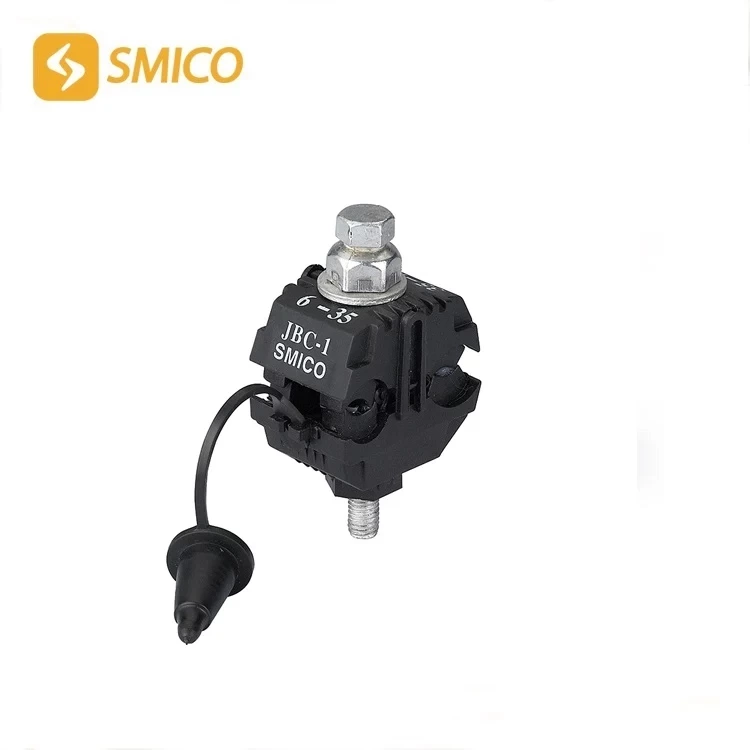
The core of the electrical piercing connector design lies in the use of a piercing blade made of a special high-conductivity alloy material, which can directly penetrate the wire insulation layer and contact the core during the clamping process. Unlike traditional welding methods, insulation connector achieves conductivity through mechanical force, thus avoiding potential quality risks associated with direct copper-aluminum welding at the process level.
Design insulation piercing, suitable for copper-aluminum transitions, utilizes a transition material process in its contact blade to form a transition layer structure at the copper-aluminum contact interface. This design reduces the direct contact area between the two dissimilar materials, thereby slowing down the rate of electrochemical corrosion. Furthermore, insulation piercing clamp's self-sealing structure and protective measures block moisture and impurities from the environment, substances that are normally the main factors in the formation of the electrolyte film layer.
In actual operation and maintenance, the torque nut design of the ipc cable connector keeps the puncture pressure at a constant level, directly affecting the stability of the contact surface. By precisely controlling the tightening force, the contact resistance can be kept within the specified range, thereby reducing the temperature rise at the joint.