Socket clevis for used on the transmission line overhead line and power line
- Product Name:
- Socket Clevis
- Model Number:
- W-7
- Brand:
- SMICO
- Standard:
- ISO 1461 ISO 9001
- Supply Ability:
- 200000/Month
- Tightening Torque:
- 40KN
- Color:
- Grey
- Material:
- Steel
- Surface:
- Hot-dip galvanizing


Description
SMICO's socket clevis is made from cast iron. SMICO socket clevis manufacturing process consists of the following steps: First, heating the iron from solid into liquid. Then pour the liquid iron into the socket clevis’s mold which contains a hollow shape of the socket tongue. When the liquid solidifies, go to the next step called annealing.
The final treatment on the socket tongue is hot dip galvanizing. Even in the tropical area conditions, where the humidity of up to 90%, the average ambient temperature of +30 degrees, the socket clevis will not get rusty.

Socket Clevis: An Ultimate Guide for Importers
What is Socket Clevis?
●Socket clevis is also known as socket tongue is a very integral component of the pole line technology.
●It is commonly used on overhead lines, transmission lines, and power lines.
●It is a major component in pole line hardware which usually connects the socket type insulator and the tension clamp.
Main Components of Socket Clevis
-A socket clevis is an assembly of various parts and components.
-Even though they vary in designs and shapes, here are some of the most common parts.

How to Install Socket Clevis?
- The insulator strings should be assembled on the ground before climbing the pole. Assembling the strings on the ground is easier as compared to doing it at the top of the pole.
- The insulators and the fittings are also installed on the ground and also at higher altitudes.
- To increase the efficiency of the installation, especially when construction conditions are in place, ground assembly is preferred.
- Assembly at high altitudes is done when the construction has restrictions.
- During the installation process of insulators and fittings at high altitudes, workers carry tools, ropes and steel tapes up the ladder.
- The position of installation of the cross arm is marked and with the assistance of a rope, it is pulled.
- The cross arm is installed in place then other hardware such as the insulator and insulator strings are installed.
Specification
| Modle | Dimension(mm) | Designated size of coupling | Rated failure load (KN) |
Weight (kg) |
||||
| C | C1 | C2 | M | H | ||||
| WS-7 | 18 | 19.2 | 34.5 | 16 | 70 | 16 | 70 | 0.97 |
| WS-10 | 20 | 19.2 | 34.5 | 18 | 85 | 16 | 100 | 1.70 |
| WS-12G | 20 | 19.2 | 34.5 | 18 | 85 | 16 | 120 | 1.70 |
| WS-12 | 24 | 23.0 | 42.5 | 22 | 90 | 20 | 120 | 3.81 |
| WS-12X | 24 | 19.2 | 34.5 | 22 | 90 | 16 | 120 | 3.10 |
| WS-12A | 20 | 19.2 | 34.5 | 22 | 85 | 16 | 120 | 1.80 |
| WS-16 | 26 | 23.0 | 42.5 | 24 | 95 | 20 | 160 | 2.64 |
| WS-20 | 30 | 27.5 | 51.0 | 27 | 100 | 24 | 200 | 4.30 |
| WS-20DF | 30 | 23.0 | 42.5 | 27 | 100 | 20 | 200 | 4.50 |
| WS-30 | 36 | 27.5 | 51.0 | 36 | 110 | 24 | 300 | 5.70 |
| WS-16G | 22 | 23.0 | 42.5 | 24 | 95 | 20 | 160 | 2.64 |
| WS-21G | 24 | 27.5 | 51.0 | 24 | 100 | 24 | 210 | 3.50 |
| WS-32G | 32 | 27.5 | 51.0 | 30 | 110 | 24 | 320 | 4.80 |
| WS-42G | 36 | 32.0 | 59.0 | 36 | 120 | 28 | 420 | 5.60 |
Advantage
The main body is manufactured from forged alloy steel or ductile iron and undergoes annealing and quenching/tempering treatments. Rated breaking loads range from 70 kN to 160 kN, with an ultimate tensile strength exceeding 2.5 times the rated load. It withstands conductor self-weight, ice loading, wind-induced oscillation, and instantaneous shock loads from conductor breakage, making it suitable for 10 kV–500 kV AC/DC overhead transmission and distribution lines. The product has passed one million-cycle fatigue vibration tests, ensuring resistance to fracture or deformation under long-term cyclic loading in outdoor environments.
Featuring a ball-and-socket plus suspension lug articulated structure, it allows for multi-angle, small-amplitude oscillation. It self-adjusts to thermal expansion/contraction, wind-induced conductor sway, and line creep, thereby eliminating stress concentration at connection points and preventing rigid tensile failure of insulators and fittings. This stabilizes insulator string alignment and conductor sag, enhancing the overall mechanical stability of the line.
The entire unit undergoes hot-dip galvanizing, resulting in a dense, uniform zinc coating that withstands acid rain, coastal salt spray, high humidity (90%), and intense heat/sun exposure. This prevents rust and seizure, ensuring an outdoor service life of over 30 years; optional powder coating or electrophoretic anti-corrosion finishes are available for harsh conditions in coastal or mining areas.
Compliant with IEC, ANSI, and national standards for power fittings, the ball-and-socket dimensions match mainstream global ball-and-socket disc insulators and composite insulators. It is compatible with steel towers, concrete poles, and wooden poles. Products of the same tonnage rating are interchangeable across manufacturers and insulator models, reducing spare parts inventory costs.
Applications cover suspension strings, tension strings, jumper strings, and substation structure connections. It accommodates common ACSR (Aluminum Conductor Steel Reinforced) sizes ranging from 25 mm² to 150 mm². A full range of standard WS/W specifications is available, with options for custom, high-load, non-standard models.
Precision casting ensures tight tolerances for apertures and ball-and-socket joints. Installation is simple, requiring only a standard wrench to secure the assembly with a standard pin and cotter pin. Certain self-locking models feature an integrated anti-detachment mechanism, eliminating the need for extra retaining plates and reducing installation and adjustment time for aerial work. Featuring a built-in retaining slot and a safety locking pin, the design prevents the pin from loosening or detaching, thereby eliminating the risk of insulator detachment or conductor drops. It also facilitates convenient inspection and insulator replacement, significantly reducing maintenance costs associated with line outages.
The smooth, rounded structure—free of sharp edges or burrs—ensures a uniform surface electric field and eliminates corona discharge and radio interference. It complies with corona testing standards for high-voltage line fittings, preventing energy loss and communication signal interference caused by partial discharge, while ensuring stable power transmission.
Location
As an integral part of pole line hardware, socket clevis is used for some purposes.
- It connects the socket type insulator and the tension clamp or the support.
- It is used as fitting in joining insulators of one string. Examples include“ball and socket, clevis and tongue connections, yoke plates for multi-string insulators.”
- It can also be used on power lines as an electric link.
- In overhead lines, it is used as an integral part of supplying electric energy to trains, trolley buses, and trams.
- In transmission lines, it is part of the system designed to help in conducting alternate currents in radio frequencies.

Packaging
Videos
Downloads
| Socket clevis for used on the transmission line overhead line and power line | Download |
FAQs
01. Manufacturer Offering Competitive Pricing and High Quality.
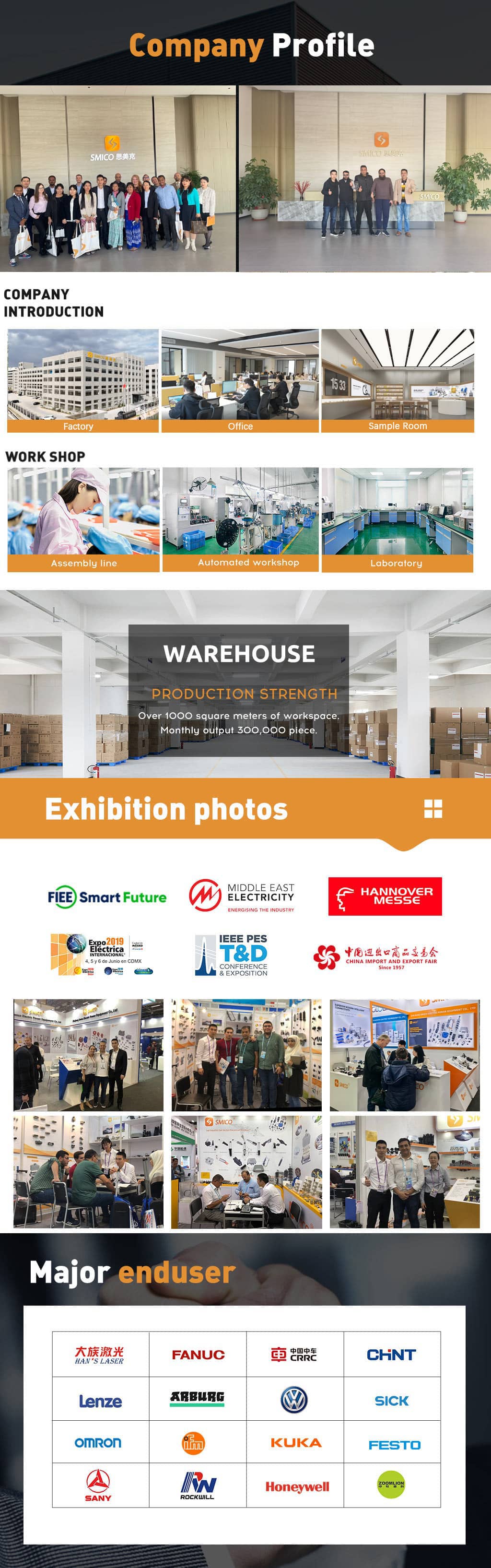
We are a direct-sales manufacturer offering both competitive pricing and high-quality products, helping you gain a foothold in the market—specifically in Wenzhou, Zhejiang Province, China. You are warmly invited to visit our company.
02. OEM/ODM Services.
We are a manufacturer backed by an exceptional and highly collaborative team.
03. Standard Payment Terms.
We accept various payment methods, including Telegraphic Transfer (TT) in advance, Letters of Credit (L/C), Western Union, and others. Please feel free to contact us if you have any questions!
04. Warranty Period.
1.5 years. Any quality issues will be resolved through free replacements included with your next order.
05. Free Samples.
Yes, we provide samples of smaller products for your quality assessment; you are only required to cover the courier fees.


